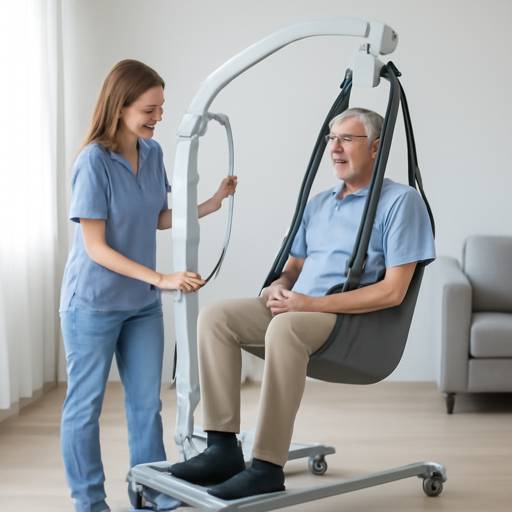
Manual patient transfers remain one of the highest-risk tasks in healthcare and home care environments. Caregivers often face significant physical strain when assisting a patient from a seated to a standing position, especially when the patient has limited lower-body strength but can still bear partial weight. This is where a power sit to stand lift becomes a transformative tool. Unlike manual lift systems that require the caregiver to pump a lever or ratchet the patient upward, electric models use a motorized mechanism to provide smooth, controlled, and consistent lifting. This technology is not merely a convenience; it fundamentally addresses the core challenges of transfer safety, caregiver ergonomics, and patient comfort. The ability to gradually elevate a patient through a natural standing arc mimics typical biomechanics, reducing the fear and instability often associated with being hoisted. For facilities aiming to reduce worker compensation claims from back injuries, or for families caring for a loved one at home, the shift from manual to powered operation represents a significant step forward in sustainable caregiving. The integration of intelligent speed control and battery backup systems ensures that even in the event of a power failure, a transfer can be completed safely. Understanding the mechanical, clinical, and operational layers of this equipment is essential for any decision-maker involved in patient mobility planning.
Mechanical Precision: How Power Sit to Stand Lifts Redistribute Transfer Load
At the heart of any power sit to stand lift is an electric actuator system that replaces the manual hydraulic pump or mechanical crank found in older models. This motorized component provides a consistent lifting speed regardless of the patient's weight, which eliminates the jerky or uneven ascent that can occur with manual operation. The lifting arm is typically connected to a specially designed sling that wraps around the patient's back and under the arms. As the actuator extends, the patient is brought into a forward-leaning posture before being raised to a full stand. This sequence is critical. A poorly executed lift can cause shear forces on the patient's skin or place undue stress on the shoulders. The powered mechanism allows for a slow, deliberate initiation of movement, giving the patient time to engage their own muscles and contribute to the transfer. The base of the unit is equally important. Most power sit to stand lifts feature a wide, wheeled chassis that slides under a bed or chair. During the lift, the base remains stationary, while the mast and lifting arm move vertically. This design prevents tipping by keeping the center of gravity close to the support structure. Many models also include a knee pad that stabilizes the patient's knees, preventing them from sliding forward during the ascent. The caregiver's role shifts from physically pulling the patient upward to simply managing the control pendant and guiding the sling into position. This redistribution of physical load is the primary reason for the significant reduction in caregiver injury rates in facilities that adopt these powered systems. Furthermore, modern units often incorporate battery indicators and emergency lowering valves, ensuring the lift remains operational and safe even when mains power is unavailable. The precision of the motor control also makes it easier to position the patient accurately over a wheelchair or commode, reducing the need for manual adjustments after the lift is complete.
Clinical Applications: Maximizing Patient Dignity and Rehabilitation Outcomes
The clinical utility of a power sit to stand lift extends far beyond simple transport. For patients recovering from hip or knee surgery, the ability to stand with graduated assistance is a key component of early mobilization protocols. A powered lift allows the physical therapist to set a specific lifting speed and height, enabling the patient to bear as much weight as they can tolerate while the lift handles the remainder. This partial weight-bearing support is crucial for rebuilding muscle memory and joint confidence without risking a fall. In long-term care settings, patients with progressive neurological conditions like Parkinson's disease or multiple sclerosis often experience fluctuations in their ability to stand. A power lift provides a predictable and consistent support system, reducing the anxiety that can lead to resistance during transfers. When caregivers must manually assist these patients, the unpredictable nature of their muscle control can lead to sudden shifts in weight that strain the caregiver's back. The lift absorbs these shifts safely. For bariatric patients, a power sit to stand lift is often the only viable option for safe transfers. The motorized actuator can handle higher weight capacities—typically up to 600 pounds or more—without requiring the caregiver to exert any more physical effort than with a smaller patient. This equity in care delivery ensures that patients of all sizes receive the same standard of dignity and safety during transfers. Additionally, the sling design used with power lifts often leaves the patient's trunk and legs more accessible than a full-body hammock sling. This accessibility facilitates easier toileting, perineal care, and dressing, which are frequent daily tasks. A rehabilitation unit might select a specific model of a power sit to stand lift for its integrated scale function, allowing weight-bearing measurements to be recorded during each transfer session. This data helps clinicians track recovery progress objectively. The reduction in manual lifting also means fewer instances of pain or discomfort for the patient, which often translates into greater cooperation and participation in the rehabilitation process.
Real-World Implementation: Case Studies in Skilled Nursing and Home Health
Examining the practical deployment of power sit to stand lifts provides valuable insight into their true impact. A skilled nursing facility in the Midwest recently transitioned from manual sit-to-stand devices to a fleet of powered lifts. In the six months following the change, the facility reported a 72% reduction in staff-reported back injuries related to transfers. The director of nursing noted that the powered lifts allowed a single caregiver to manage transfers that previously required two or three staff members, easing a chronic staffing shortage. The key was the elimination of the manual pumping action, which had been the primary cause of repetitive strain injuries among veteran nursing aides. In a separate home health scenario, a woman in her late 70s caring for her husband post-stroke found that a power sit to stand lift allowed her to maintain their daily routine without outside assistance. Her husband could stand with help, but his balance was unreliable. The lift's knee pad and secure sling gave him the stability he needed to pivot safely into his wheelchair. The powered operation meant his wife did not have to strain to pull him upright, which she had previously found exhausting and frightening. Over a three-month period, his ability to bear weight improved, and the lift's consistent support was cited by his physical therapist as a key factor in his neuromuscular re-education. Another example comes from a bariatric rehabilitation center that integrated power lifts as a standard part of their admission protocol. Previously, manual lifts for larger patients required extensive setup and multiple staff members, often leading to delays in transfers and a sense of dependency among patients. With the powered system, a single staff member could initiate the lift remotely, allowing the patient to stand at their own pace. This restored a sense of autonomy that was previously missing. The center also used the lifts to perform daily weight measurements, tracking fluid balance and nutritional status without requiring a separate scale transfer. These real-world cases demonstrate that the effectiveness of a power sit to stand lift depends not only on the hardware but also on consistent staff training, proper sling selection, and a culture that prioritizes safe mobility over speed.